BlogWebinar Recap: M&A Country Series: Making Deals in Vietnam
Blog
Webinar Recap: M&A Country Series: Making Deals in Vietnam
IMAA
SHARE:
The Institute for Mergers, Acquisitions and Alliances (IMAA), together with the Association for Mergers and Acquisitions in Singapore, hosted a webinar exploring the evolving mergers and acquisitions (M&A) landscape in Vietnam last March 26.
Bringing together perspectives from strategic investors, legal and financial experts, and commercial due diligence specialists, the session offered a comprehensive view of the opportunities and challenges shaping dealmaking in one of Southeast Asia’s most dynamic markets—Vietnam.
Vietnam as a Strategic M&A Destination
Increasingly recognized as a strategic growth hub, Vietnam recorded 218 M&A deals worth approximately USD 2.3 billion in the first ten months of 2025. It continues to attract strong investor interest, supported by its robust economic growth, expanding consumer market, and increasing integration into global supply chains.
As companies seek to diversify operations and tap into Southeast Asia’s growth potential, Vietnam has emerged as a key entry point into the ASEAN region.
Beyond macroeconomic fundamentals, the country’s openness to foreign investment and ambition to move up the value chain further reinforce its strategic importance.
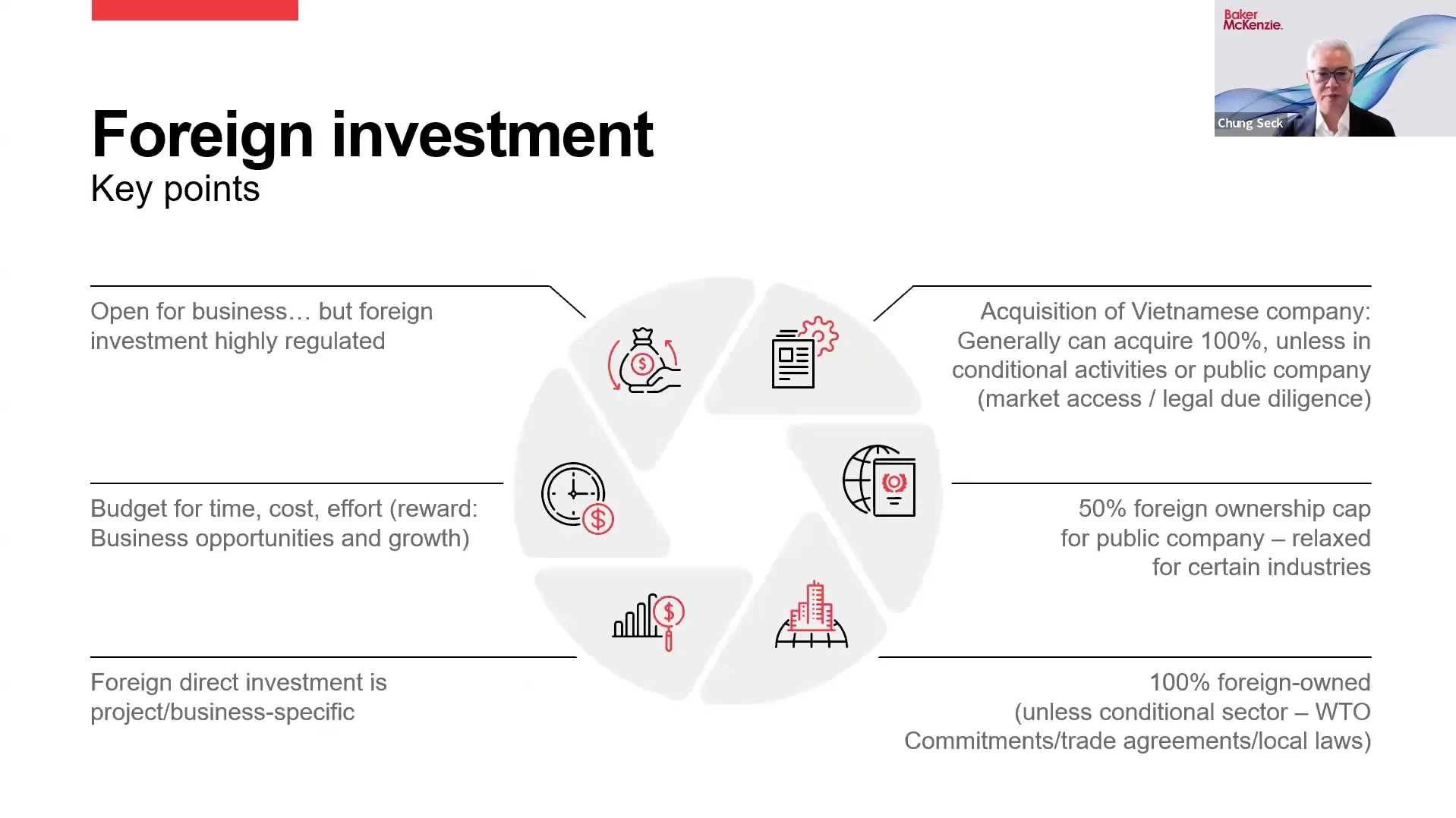
Yee Chung Sek of Baker McKenzie highlights Vietnam’s openness to foreign investment, supported by clear
frameworks on ownership, approvals, and sector access that enable long-term growth opportunities.
A Relationship-Driven Approach to Market Entry
A notable theme from the discussion was the distinct approach taken by Japanese investors in Vietnam. Rather than pursuing immediate full acquisitions, many adopt a phased strategy that typically begins with minority stakes before gradually increasing ownership over time.
This approach reflects a broader emphasis on long-term partnership, trust-building, and value co-creation.
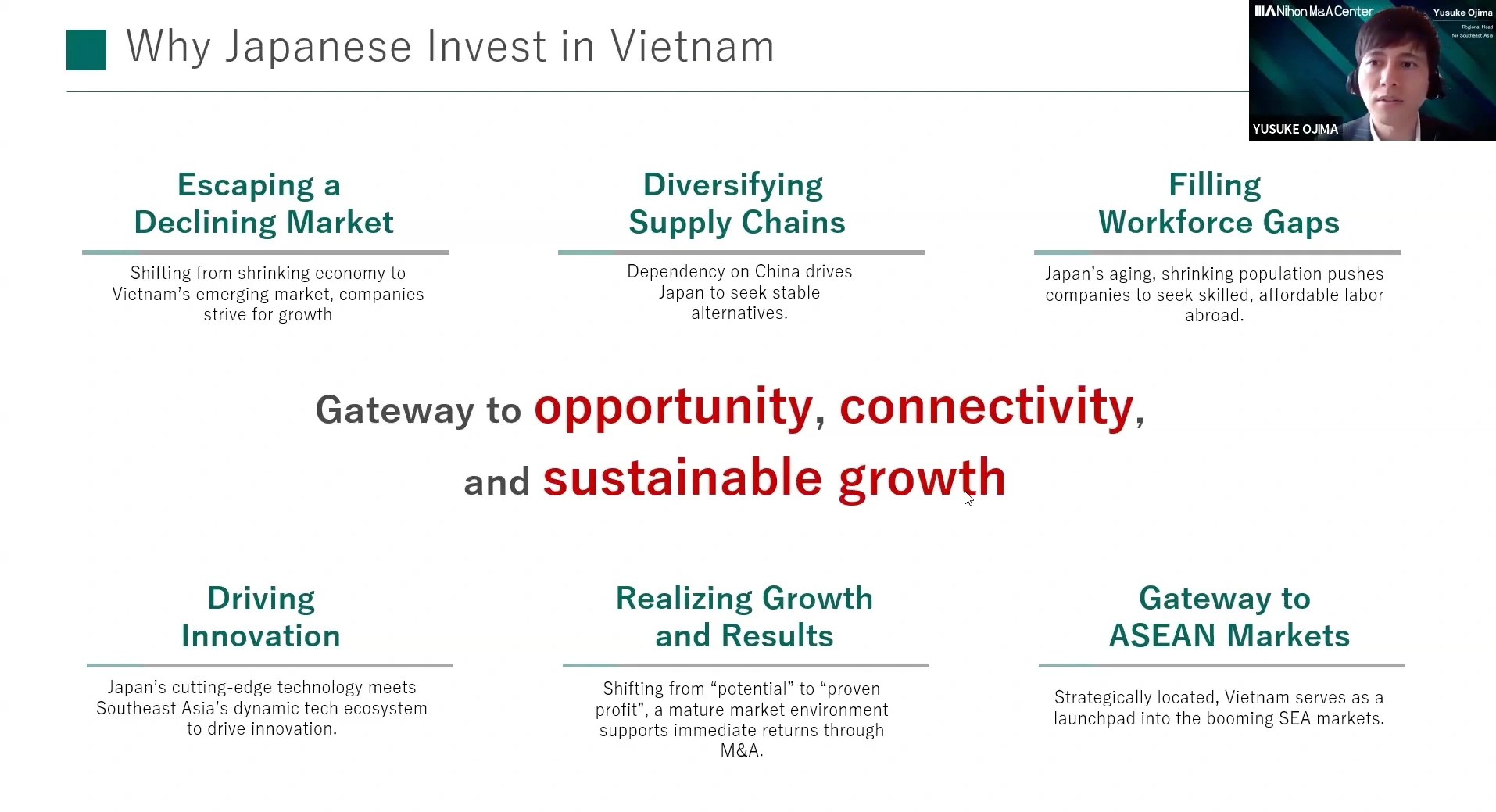
Yusuke Ojima of Nihon M&A Center Inc. outlines why Japanese companies are investing in Vietnam- highlighting
growth opportunities, supply chain diversification, workforce advantages, and Vietnam’s role as a gateway to
ASEAN markets.
Market Trends: Shifting Investor Priorities
Vietnam’s M&A market experienced a peak in activity in 2021, followed by a slowdown in subsequent years. While 2024 showed signs of recovery, overall activity remained subdued, with 2025 likely representing the bottom of the cycle.
Looking ahead, early indicators suggest a gradual rebound, supported by improving investor sentiment and market fundamentals.
Another key development is the shift in investor mindset. In previous years, capital was often directed toward high-growth opportunities. Today, investors are prioritizing resilience, profitability, and predictable cash flow over top-line expansion.
“Investors earlier go for top line growth, but right now they go back to more resilient sectors where cash flow and growth are more predictable,” The Anh Dinh of KPMG Vietnam said.
This shift reflects a broader recalibration toward disciplined investing, particularly in uncertain market conditions.
Valuation Dynamics and Market Realignment
Valuation expectations remain a central challenge in Vietnam’s M&A landscape. Historically, sellers have commanded premium pricing, often driven by strong growth expectations.
At the same time, market dynamics are shifting as investors become more cautious and selective, leading to a clearer alignment gap between buyer expectations and seller aspirations.
As a result, negotiations are becoming more rigorous, and alignment on valuation is increasingly critical to closing deals.
The Importance of Commercial Due Diligence
In an emerging market like Vietnam, access to reliable data can be limited, making commercial due diligence a critical component of the transaction process.
To address these challenges, investors must adopt a rigorous, data-driven approach. This includes combining market analysis, stakeholder validation, and benchmarking to build a realistic view of future performance.
“In Vietnam, data availability and quality remain a key challenge, so investors must rely on a combination of data analytics and real market intelligence,” Le Xuan Dong of FiinGroup said. “We do not only analyze data—we engage with competitors, suppliers, customers, and authorities to validate assumptions and test market realities,” he added.
While executing a deal is complex, long-term success ultimately depends on effective post-merger integration. Aligning cultures, systems, and operational processes is critical to realizing value. Poor integration can undermine even the most promising transactions.
Outlook: A Market Defined by Discipline and Opportunity
Looking ahead, Vietnam’s M&A market is expected to evolve toward greater sophistication, with increased emphasis on data-driven decision-making and disciplined execution.
Despite ongoing challenges, the country remains a high-potential market for strategic and financial investors alike.
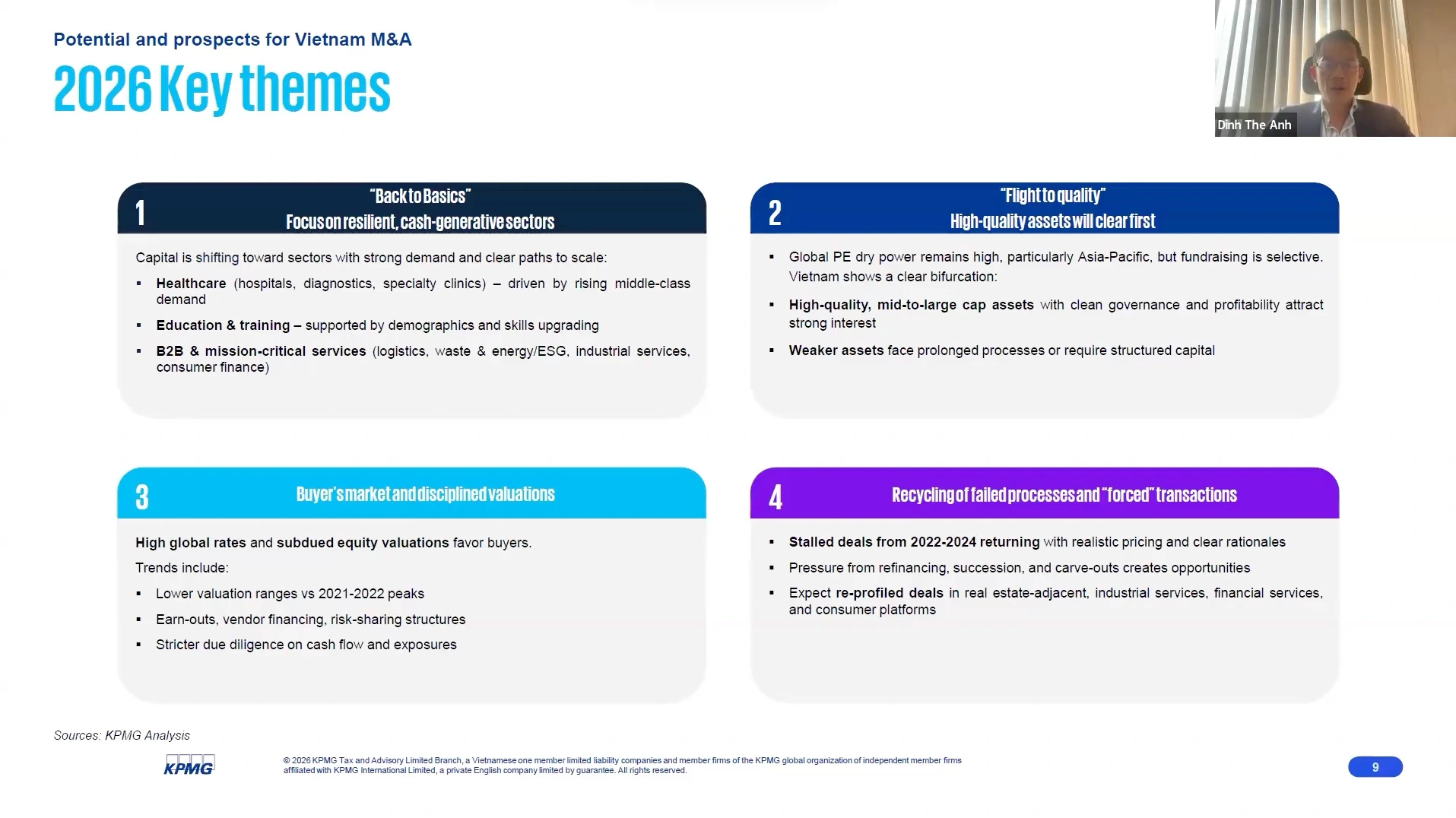
Dinh The Anh of KPMG Vietnam highlights the key M&A themes shaping 2026, including a focus on resilient
sectors, high-quality assets, disciplined valuations, and renewed deal activity across the market.
Conclusion
The webinar highlighted that while Vietnam offers compelling opportunities for M&A activity, success depends on navigating complexity, aligning expectations, and executing with discipline.
Those who take a long-term view, invest in relationships, and apply rigorous analysis will be best positioned to unlock value in this dynamic and rapidly evolving market.
Catch the full webinarreplay to see the full case study and learn from the rich Q&A discussion. Available on Vimeo.